
I was first introduced to the concept of “I” statements during a parenting facilitation course. Over time, I realised that this simple yet powerful tool isn’t just useful for parents, it’s a communication strategy that works with adults and in many aspects of our lives, including the workplace.
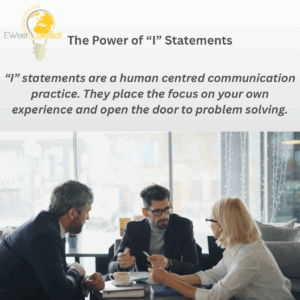
“I” statements are a human centred communication practice. They place the focus on your own experience and open the door to problem solving.
So often, when we’re upset, our words trigger the other person’s fight, flight, or freeze response. They stop listening and start preparing their defence. The conversation quickly shifts from connection to conflict.
“I” statements create the opposite effect. They allow the speaker to stay focused on their own experience and emotions without blaming, shaming, or playing the victim. At the same time, they invite the listener to actively listen with empathy rather than defensiveness.
Clear, effective communication is at the heart of every successful workplace. Yet many conflicts at work arise from misunderstanding, defensiveness, or unspoken frustration. One simple but powerful way to shift this is through the use of “I” statements.
The Structure Is Simple
1. I feel… (state your feelings)
2. When… (describe the specific behaviour or situation that triggered the feeling, without blame)
3. Because… (explain the impact it has on you, your work, or your performance)
4. What I need/what would help… (suggest a constructive alternative or solution)
Examples of “I” Statements in the Workplace
• Creating realistic timelines
“I feel uneasy when deadlines are missed because it makes it harder for me to stay focused and organised. What would help is for us to agree on realistic timelines and set regular check-ins along the way.”
• Ensuring transparent communication
“I feel left out when I’m not included in updates about our joint project because it leaves me unclear on decisions that affect my work. Moving forward, it would be helpful to be included in weekly update or follow-up emails.”
• Balancing workload expectations
“I feel overwhelmed when several tasks come in at once without a clear sense of priority. It would make a big difference if we could decide together what needs to be tackled first.”
“I” statements move us from arguments toward understanding and from conflict toward solutions.
Why “I” Statements Matter at Work
• Promote active listening – By speaking from your own perspective, you reduce defensiveness and expand the capacity for colleagues to listen with empathy and compassion.
• Solution-focused and future-oriented – Instead of hinting or holding back, you name exactly what’s happening and clarify what would make things better moving forward. This promotes teamwork, shared responsibility, and co-creating solutions.
• Honouring the human side of work – Often in the workplace, emotions are left out. “I” statements create space to bring your whole self; thoughts, feelings, and values into conversations in a constructive way.
Beyond the Workplace
“I” statements are not only for the office. They can strengthen communication and relationships in every area of life.
Reflect on these questions:
• Where in your life would you like to shift a conversation or relationship?
• What do you need to let go of in order to share your deeper feelings?
• How do you feel and respond when facing decline or rejection?
• What does vulnerability mean to you? What words do you associate with it…weakness, shame, strength, boldness? What new interpretations could be helpful?
Listening Matters Too
Communication isn’t only about what we say. It’s also about how we listen. When someone shares their feelings with you:
• How do you respond?
• What shifts if you listen to understand, rather than to react?
• What values and emotions do you associate with deep listening?
• How might your body posture, tone of voice, and facial expressions open the space for dialogue or unintentionally close it?
“I” statements provide a framework for expressing concerns honestly while preserving relationships. When people feel heard and respected, conversations focus on solutions instead of arguments. They help the speaker express their truth, and they help the listener stay open and compassionate, turning potential conflicts into opportunities for understanding and growth.
Where could you try an “I” statement this week?
If this resonates, you might also enjoy my articles:
Mindful Eating: How a New Habit Can Change Your Life
Rehab Abbas – Leadership Coach | Somatic, Stress & Wellbeing Coach | Certified Values Facilitator
I help you turn goals into achievements and break the cycle of procrastination through practical, values-driven steps tailored to your life