
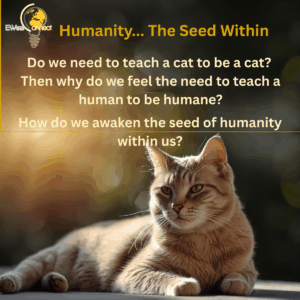
Do we need to teach a cat to be a cat? Then why do we feel the need to teach a human to be humane?
Think about a leader who abused their power, or a tyrant you can imagine. Even that person was once a baby, born with the seed of humanity. Every one of us carries that seed. It is the core of our soul. But as we grow, we are exposed to all kinds of feelings and behaviors. Light and darkness. Good and evil. Both live within us
Nelson Mandela once said: “As I walked out the door toward the gate that would lead to my freedom, I knew if I didn’t leave my bitterness and hatred behind, I’d still be in prison.”
Mandela endured 27 years in prison. Yet, instead of fueling hatred, he chose forgiveness. He ended apartheid by first separating himself from bitterness. Forgiveness and peace became his banner. He proved that the seed of humanity never disappears, even if buried in darkness.
It’s true that what we witness, inherit, and experience from our families, schools, communities, and politics shapes us. Yes, hatred, injustice, and distrust can be passed down to us. What makes the difference is which part we were fed first. But as we grow, whether we continue feeding hatred or compassion becomes our decision.
So How do we awaken the seed of humanity within us? How do we nurture it so it flourishes?
As a professional, I had the honor of working closely with refugees. I believe that behind every refugee story is courage, resilience, and our shared humanity. A refugee is not a label, but rather a recognition of the many complex external factors that force a human being to leave behind home, work, school, savings, and cherished memories. Leaving all that behind is one of life’s hardest decisions. “Choice” a word many of us take for granted is often absent from their lives.
Over the years, I supported more than 65 displaced families: listening deeply to their stories and hopes, and walking alongside them as they rebuilt their lives with courage and dignity. My holistic coaching approach empowered individuals and families to reclaim agency and reconnect with their inner resilience.
Through my work I learned that sometimes the toughest environments teach us the most about who we are and how we can become a better version of ourselves. Here I share what I have learned, and how you too can nurture and embody humanity as a living value.
The seed of humanity is never gone. It may lie hidden, neglected, or overshadowed by fear and injustice. But it is always there, waiting to be awakened.
Here are 10 practices I’ve learned from my work with refugees and from life itself that can help us nurture and sustain this seed of humanity.
10 practices to awaken and sustain our shared humanity
1. Connect with Your “Why”
Many displaced families rebuilt their lives because they held onto a bigger “why”; their children, their future, their dignity, their calling. Purpose gave them the strength to endure hardship and keep moving forward.
Your “why” is your inner compass. It reflects your deepest values and connects you with what matters most. When you return to it, you find direction, resilience, and meaning even in uncertain times.
🤔 Reflective question: What purpose fuels your resilience and keeps you connected to what matters most?
2. Practice Forgiveness
Working with refugees taught me that kindness and generosity often bloom strongest in times of scarcity. At the root of humanity lies one essential value: forgiveness.
Forgiveness doesn’t mean forgetting, and it doesn’t mean approving what happened. It is not about others, it is about you. When you forgive, you release the weight of resentment, freeing yourself to move on, to reconnect with your hopes, and to move closer to your goals. Only then can compassion, kindness, and gratitude take root and grow.
🤔 Reflective question: Where in your life could forgiveness for yourself or for others open space for healing and new possibilities?
3. Be Present
Many families I worked with carried invisible burdens. By being fully present, I could hear not only their words, but their silences.
Presence starts within, listen deeply to your body. Notice your triggers, inner dialogue, and patterns of behavior along with your chosen and inherited values. When you learn to show up fully in the moment, you create the capacity to be truly present with others. Presence is the first step to connection.
🤔 Reflective question: What helps you return to the present moment when you are distracted?
4. Embrace Vulnerability
Families who shared their pain also revealed their deepest strength. Vulnerability is not weakness , it is courage. When we dare to be seen as we are, we invite connection on a deeper level.
Let go of the illusion of perfection. Share your imperfections, fears, and unique qualities. They are what make you human and relatable. Vulnerability is the bridge that transforms isolation into belonging.
🤔 Reflective question: What part of yourself are you most afraid to reveal and what connection might it create if you did?
5. Cultivate Humility & Openness
True wisdom often comes from listening, not speaking. Humility begins when we create space for others to teach us, valuing their experiences as much as our own. It shifts us from needing to be right to being open to growth.
Openness goes hand in hand with humility. It means stepping beyond our own perspective, recognizing that what’s “normal” is not universal. We don’t need to agree with everything we encounter, but we do need to respect that others come from different backgrounds and experiences.
Together, humility and openness move us from judgment to curiosity, from walls to bridges.
🤔 Reflective questions:
Where could you step back with humility, and what assumptions might you need to let go of to see through another’s eyes?
What mindset, feelings, or practices could help you embody a posture of openness?
6. Fill Your Cup
I realised I couldn’t support others if I was exhausted. Self-care is not selfish, it is essential.
Nurture yourself physically, emotionally, and spiritually. Only then can you give from a place of wholeness and generosity. An empty vessel cannot fill another’s cup.
🤔 Reflective question: What one small habit can you begin today to restore your energy and refill your cup?
7. Nurture Hope and Joy
Even in hardship, I witnessed moments of laughter, shared meals, and small joys that kept people going. Hope and joy are quiet acts of resistance against despair.
Celebrate small wins. Share beauty, gratitude, and joy. Hope is the fuel for resilience.
“Remember that hope is a powerful weapon even when all else is lost.” Nelson Mandela
🤔 Reflective question: What keeps hope alive for you, even in difficult times?
8. Align and Stay Grounded
In the chaos of transition, grounding practices and connecting with core values became anchors for them, and for me.
Staying grounded is about finding stability in what sustains you, even when the world feels uncertain. Practice mindfulness, prayer, breathwork, or spend time in nature. Let creativity rooted in kindness remind you of your shared humanity and values. Grounding reconnects us with what truly matters.
🤔 Reflective question: What practice helps you return to your center when life feels chaotic?
9. Act with Compassion
There is something powerful about softening our hearts through giving. Compassion is not just a feeling it is action.
Visit orphanages, sit with the elderly in nursing homes, spend time with those who are vulnerable. This is not about online donations, it is about being physically present, letting people know they matter. You may feel both joy and pain, but in that tension the seed of humanity awakens in you and in them. Compassion grows when we choose presence over distance.
🤔 Reflective question: Where could you show up this week to remind someone that they are seen, cared for, and not forgotten?
10. Build Meaningful Connections
Healing happened not in isolation, but in community. Families thrived when supported by networks of care.
Nurture relationships of trust. Ask for help, offer support, volunteer, give, and serve beyond yourself. Humanity flourishes when we lift one another.
🤔 Reflective question: What connection can you strengthen this week?
Together, these practices don’t just awaken humanity, they sustain it.
The seed of humanity is already within us. It doesn’t need to be taught, only nurtured, watered, and given light. The real question is not whether we have it but whether we will choose to feed it, every day, through the choices we make and the lives we touch.
What Roots Do You Want to Water Today?
If this resonates, you might also enjoy my articles:
The Art of Deep Listening: 6 Steps to Build Deeper Connections and Better Results
Mindful Eating: How a New Habit Can Change Your Life
The Power of “I” Statements: How “I” Statements Transform Conversations at Work
Rehab Abbas – Leadership Coach | Somatic, Stress & Wellbeing Coach | Certified Values Facilitator
I help you turn goals into achievements and break the cycle of procrastination through practical, values-driven steps tailored to your life